Research Report on “Agricultural Resilience”: towards a sovereign, profitable and sustainable French agriculture by 2050
- Strategy
- Group
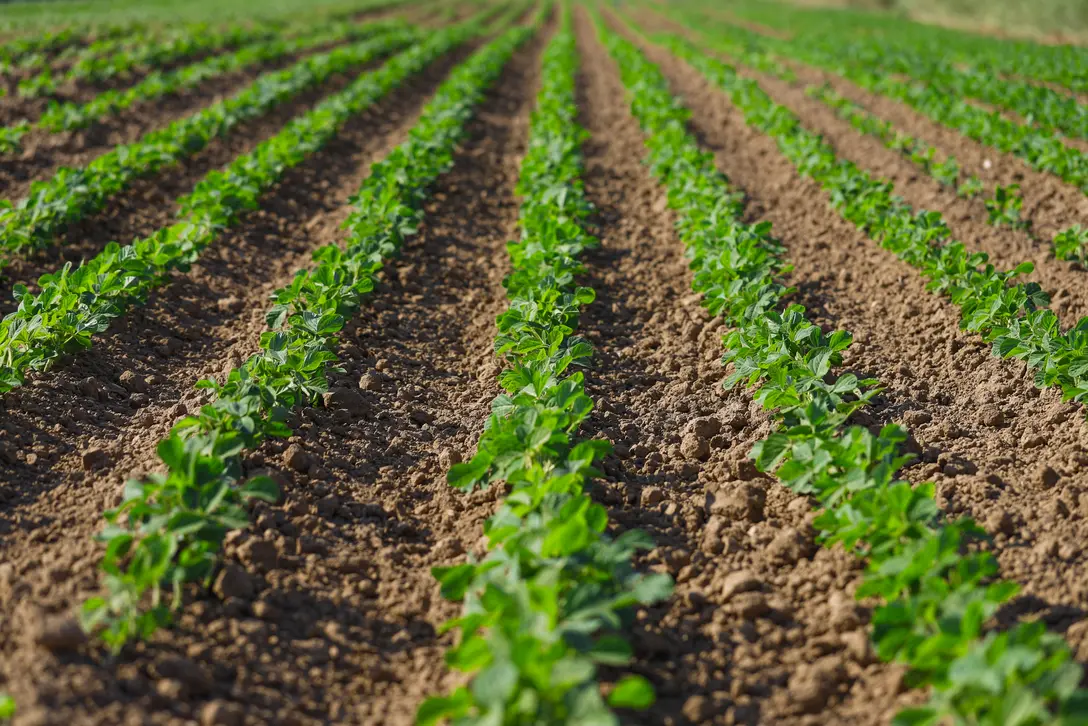
Four major economic players in the French agricultural sector join forces to outline pathways for economically resilient agriculture in the face of climate change
Ensuring this resilience requires accelerating the large-scale deployment of solutions adapted to farms, productions, and territories
Crédit Agricole, InVivo, Sofiprotéol, and Unigrains, four major economic actors in the French agricultural sector, have formed an unprecedented consortium to unveil the findings of a jointresearch report on the resilience of French agriculture by 2050. Their work shows that, despite significant challenges, adaptation pathways are possible. The “Agricultural Resilience” report confirms that farm profitability can not only be maintained but even improved, provided that actions taken to address climate change are ambitious and systematically implemented. It also emphasizes the urgency of the issue, as the cost of inaction will be far higher than the cost of action.
French agriculture: a major source of value creation
The agricultural and agri-food sector accounts for 3.8% of national GDP, generating nearly €100 billion in added value and contributing to 5% of employment in France. Beyond the figures, French agriculture stands out thanks to its farmers who innovate and adapt to changes in order to feed the country and preserve its territories.
The consortium proposes a unique approach based on combined expertise: for the first time, the adaptation of French agriculture is analyzed at the farm level through both economic and agronomic lenses. This innovative perspective identifies and evaluates concrete levers available to farmers and industrials to meet future challenges.
No single solution, but a range of complementary and proven levers
While the study confirms the negative economic impact of climate change on French farms, it also delivers an optimistic message: implementing resilience levers, already known or present at farm level, not only offsets these effects but, in some cases, improves per-hectare results. About twenty such levers and solutions, drawn from field trials and expert interviews, were analyzed, evaluated, and prioritized.
Examples include :
Agronomic levers :
- Crop rotation changes : introducing high-value crops such as hemp or legumes, modifying and lengthening rotations.
- New farming practices: adopting regenerative agriculture techniques to improve soil health and reduce reliance on inputs.
Technological levers :
- Genetic improvement of varieties and species, biocontrol solutions.
- Precision agriculture and robotics to optimize inputs and yields.
Economic and organizational levers :
- Reintroducing mixed crop-livestock systems to diversify income and strengthen resilience.
- Developing intermediate crops for energy purposes to create new sources of value.
These levers are realistic, operational, and already implemented in some farms. However, large-scale deployment will require comprehensive support for farmers in change management and adapting downstream markets.
A necessary, accessible, and profitable investment
For the surface area studied, representing about 50% of France’s utilized agricultural area (UAA), the investment required for the transition of “Ferme France” is estimated between €16 billion (to maintain current farm profitability) and €29 billion (to deploy all identified levers), which would generally lead to increased per-hectare revenues.
At farm level, this corresponds to between €1,100 and €2,000 per hectare over 2025–2050, with a return on investment of 10–11 years for a €16 billion investment.
The technical deployment and financing of these levers will require the involvement of multiple stakeholders beyond the farmer. It is therefore a collective effort that will enable scaling up and industrialization of the proven levers. Without it, efforts will remain insufficient because…
Inaction will cost more than action
The study clearly demonstrates the urgency of these investments. Agriculture is already impacted by climate variability, biodiversity challenges, and regulatory constraints that will intensify in the coming years.
Without action, 90% of agricultural production and 80% of territories will be weakened, causing value destruction of €4–7 billion per year, or a 30–50% loss of profitability for farms in the studied area.
A collective, coordinated, and urgent effort
The consortium aims to make the report’s results available to all sector stakeholders. It calls for mobilization across the entire value chain, from research to farmers to consumers, and the whole ecosystem (financiers, insurers, public authorities) to activate agronomic, technological, economic, and organizational levers for a winning trajectory for French farms facing climate change.
By 2050, France can combine food sovereignty, economic performance, and climate adaptation in its agriculture. Preserving French agriculture means preserving our food, territories, and jobs.
Jean-Pierre Touzet, Head of Agri-Agro, Guarantee and Growth Capital at Crédit Agricole S.A.: “For 140 years, Crédit Agricole has been the main banking partner of the French agricultural sector, supporting each of its major transitions. This report on agricultural resilience highlights the financial challenges linked to the transformation of farms. Aware of these challenges, we design and develop innovative financing and guarantee solutions to support farmers and encourage generational renewal. In early 2026, we will launch an agricultural development fund—an unprecedented initiative to sustainably support installation, modernization, and growth projects for French farms. More than ever, Crédit Agricole remains committed to working alongside farmers to build a resilient, sustainable, and high-performing agriculture together.”
Olivier Clyti, Director of Strategy, CSR, and Digital at InVivo: “While the report unsurprisingly confirms the negative economic impact of climate change on French farms, it also delivers an optimistic message: implementing resilience levers—already known or present at farm level—not only offsets these effects but, in some cases, increases per-hectare results. At InVivo, we want to make the results of this study available to all sector stakeholders. It is a concrete contribution to collective awareness and calls for mobilization of all actors in the value chain—from research to farmers to consumers—as well as its ecosystem: financiers, insurers, and public authorities.”
Xavier Dorchies, Deputy CEO, Sofiprotéol: “For Sofiprotéol and Avril, financial and industrial players in the French oilseed and protein crop sector, this report complements and enriches our forward-looking work on the oil-protein sector. It confirms the importance of actions undertaken and supported for several years, such as adopting new farming practices and crops—particularly legumes—that strengthen resilience while combining ecological and economic performance for farmers. The challenge now is to mobilize all stakeholders to deploy these levers on a large scale. This report will also guide our future financial and industrial investments, as the agricultural transition requires a collective effort whose benefits will be shared: protecting the profitability of French farms means reclaiming our food sovereignty.”
Maxime Vandoni, Deputy CEO, Unigrains: “The publication of this report comes at a time when the French agricultural sector faces an unprecedented and serious situation; we are concerned and clear-eyed about major short-term issues – competitiveness, pricing, political will – that will be decisive for the future. Nevertheless, it remains essential to project French farming over the span of a generation. That is the purpose of this forward- looking work, whose encouraging conclusions rely on farmers’ commitment, the strength of the identified levers, and large-scale mobilization of the agricultural ecosystem. A high-performing French agri-food industry – the one that Unigrains is committed to supporting – requires resilient, sovereign, and sustainable agriculture. We are aligned with this 2050 trajectory and the ambition to support and promote French agriculture and agri-food, two pillars of our heritage.”
Methodology:
A rigorous and original report based on a holistic and scientific approach
The report is based on the analysis of 11 representative farms located in 9 territories covering 52% of France’s utilized agricultural area, or about 14 million hectares. It relies on reference economic and agronomic data with a farm-centered approach and crop rotations representative of « Ferme France ».
- DOCUMENT TO DOWNLOAD
Press release
Press_release_Research_Report_on_Agricultural_Resilience.pdf

Other news
See all news
- CSR
- Group
Mission Committee Report 2024/2025


- Social dialogue
- Group
InVivo obtains approval for its Group Disability Agreement and rolls out “Handi Impact” to strengthen inclusion across the Group

- Partnership
- Group
International Agriculture Show: TotalEnergies and InVivo strengthen their partnership to support the energy transition of the agricultural sector

- Finance
- Group
Sofiprotéol supports the long-term development of the InVivo Group by subscribing to a new issue of participating securities