1664 Blonde revolutionises French beer Aiming for 100% traceable responsible barley and regeneratrive agriculture by 2026
- Innovation
- Malting
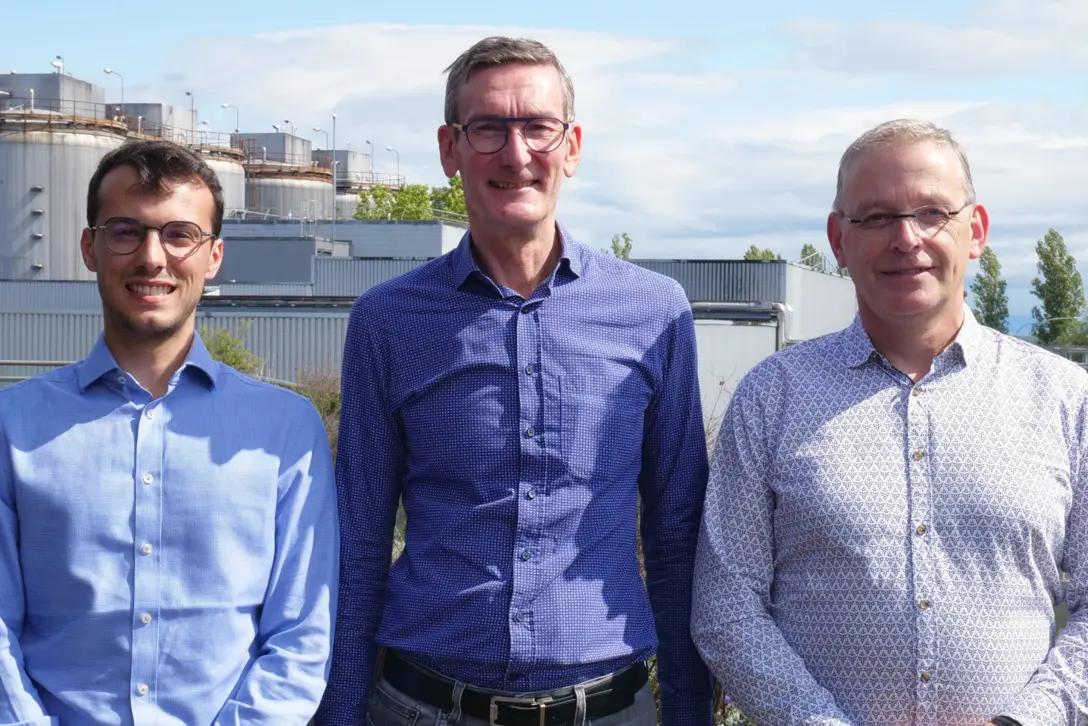
1664 Blonde is taking a new step towards transforming the French beer market in a sustainable way: from 2026, 1 in 10 beers consumed in France will be brewed with 100% traceable Responsible Barley, sourced from an exclusive, segregated and innovative supply chain, co-developed by Brasseries Kronenbourg, Soufflet Malt and Soufflet Agriculture (subsidiaries of the InVivo group) since 2022. The three partners are renewing their partnership for a further two years (2026 and 2027 harvests), thereby continuing this pioneering initiative, which now combines regenerative agricultural practices, total traceability thanks to blockchain technology, and strong commitments to the environment, farmers and consumers.
A founding and visionary partnership to transform the barley-maltbeer sector
The Responsible Barley traceability chain has been a concrete success since its launch in 2022. The ambitious commitments made by the three partners to transform 10% of the beer market in France have been fully achieved. In three years, the number of partner farmers has grown from 45 to 216, and more than 5,800 hectares are cultivated according to the specifications of the Responsible Barley Traceability sector for the benefit of 1664 Blonde beer. All the objectives set – traceability, high quality, remuneration for farmers and reduction of environmental impact – have been achieved. From 2026, 1664 Blonde will be brewed with 100% malt from this sector, proving that change is possible and real.
As part of the "Semons du Sens" sustainable supply chain initiative, this dynamic highlights the culture of innovation and global expertise of Soufflet Malt, which is working alongside Soufflet Agriculture to promote a sustainable, traceable and resilient barley-malt-beer supply chain.
"The partnership with Brasseries Kronenbourg for a responsible, traceable and sustainable barley-malt-beer supply chain is perfectly in line with our desire to develop effective and impactful solutions that ensure a genuine agroecological transition. To accelerate the evolution of this entirely segregated sector towards regenerative agricultural practices, we are opening up a new and innovative path that meets our joint ambitions. We are very proud, together with all our partner teams, to share these strong values and commitments with Brasseries Kronenbourg,"
Guillaume COUTURE, President EMEA of Soufflet Malt.
A pioneering path for the Responsible Barley sector
From 2026, 1664 Blonde will become the first and only beer in France to guarantee a 100% supply of malt from the traced Responsible Barley sector, with a trajectory oriented towards regenerative agriculture. This ambitious choice has a significant impact as it concerns 10% of the French beer market, or one in ten beers consumed, and marks a major step forward in the transformation of the sector.
A two-year extension of the partnership with key changes to the specifications
Soufflet Agriculture, Soufflet Malt and Brasseries Kronenbourg are renewing their partnership for a further two years (2026 and 2027 harvests) and are taking the opportunity to step up their commitment by incorporating new, enhanced and measurable specifications, while ensuring the brewing and organoleptic quality of the malt :
- Transition to regenerative agriculture: the specifications take a decisive step forward by incorporating regenerative agriculture practices from the 2026 and 2027 harvests onwards. Partner farmers are supported in gradually adapting their methods, particularly in terms of soil cultivation, plant cover, crop diversification and biodiversity preservation.
- SAI Platform compatibility and ambition: the sector is seeking official recognition by the SAI Platform, the international benchmark for sustainable agriculture, with the aim of obtaining recognition under the "Regenerating Together Framework" by 2030.
- Stronger low-carbon requirements: the new specifications commit all partner farmers to high-impact levers, including a significant reduction in CO₂ emissions through the use of low-carbon mineral fertilisers and optimised nitrogen fertilisation management.
- In-depth biodiversity monitoring: biodiversity indicators have been strengthened, with regular monitoring of partner farms, the introduction of cover crops and the sustainable management of plant protection products.
- Support for farmers: to ensure the success of this transition, Soufflet Agriculture is providing specific support to help roll out regenerative farming practices in the field, drawing on the innovation and technical expertise of its partners.
- And as always: total traceability, as every tonne of barley and malt produced by this supply chain is carefully monitored, ensuring quality, transparency and recognition of the efforts made in the field.
Solid commitments to transform the sector
This structuring dynamic embodies a shared desire to go further, with measurable commitments on traceability, malt quality, farmer remuneration, carbon footprint reduction and sustainable environmental preservation. It places the Responsible Barley traceability supply chain at the forefront of the agricultural and food transition in France and Europe.
REGENERATIVE AGRICULTURE: PRINCIPLES AND AMBITIONS
In the face of climate change, we firmly believe that agriculture is part of the solution. But it must be resilient, sustainable agriculture that is resolutely focused on regenerative farming practices. Although there is not yet a universal framework, a consensus is emerging and several initiatives are proposing structured guidelines to support farmers in adopting these sustainable agricultural practices.
Regenerative agriculture is a comprehensive agricultural approach, whose main objective is to restore and improve soil health. This approach promotes synergy between crop and livestock systems. It is based on a set of agricultural practices whose implementation also contributes to the fight against climate change and biodiversity loss, while ensuring sufficient productivity and economic performance to maintain profitable, resilient and competitive agricultural activity in the long term.
A segregated and blockchain-based supply chain, unique in France, for 1664 Blonde
Thanks to a fully segregated and traceable supply chain using the "Transparency" blockchain solution offered by Soufflet Malt, 1664 Blonde is the first French beer to guarantee that, from 2026, its barley malt will be 100% sourced from responsible and regenerative agriculture.
This unprecedented traceability, accessible to all thanks to a QR code on each pack and bottle, makes it possible to trace the beer's journey from field to tasting and offers consumers an immersive digital experience. Now rolled out since mid-2025 in cafés, hotels and restaurants (CHR), this approach has won over more than 370,000 users since its launch, who remain connected for an average of 2 minutes, proof of the sector's pioneering commitment and public support.
"Ensuring that by 2026, 100% of the barley malt used for 1664 Blonde comes from responsible agriculture, which is constantly pushing the boundaries with new practices in regenerative agriculture, is a strong, long-term commitment. Because it represents one in ten beers consumed in France, this initiative goes beyond our own brand: it contributes to the sustainable transformation of the entire beer industry,"
Agnès d'Anthonay, Senior Director of Corporate Affairs at Brasseries Kronenbourg.
IMPACT OF THE AGROECOLOGICAL TRANSITION : KEY FIGURES FOR 2025
- 216 partner farmers committed, an increase of 80% compared to 2024 (120 farmers), spread across the Grand Est, Burgundy (particularly Champagne and Barrois-Côte d'Or) and Brie-Picardie regions.
- 5,830 hectares of cultivated land, equivalent to more than 8,000 rugby pitches.
- 5.5 different plant species cultivated on average per farm (vs. 5 in 2024).
- 99 hectares of honeyfall fallow land established, promoting pollinators and biodiversity.
- 635 beehives deployed on 38 farms, representing around 19 million bees, compared to 236 beehives in 2024.
- 211 kilometres of hedges or wooded borders, nearly four times more than in 2024 (53 kilometres).
- 85 nesting boxes installed on 34 farms, compared to 25 nesting boxes in 2024.
- More than 460 perches in place on 61 farms (vs. 151 perches in 2024).
- DOCUMENT TO DOWNLOAD
Press release
CP_Brasseries_Kronenbourg_Soufflet_DEF_GB.pdf

Other news
See all news
- Innovation
- Malting
Soufflet Malt and Ferments du Futur accelerate the development of new food applications through solid-state malt fermentation


- CSR
- Malting
Malting a world of difference: Soufflet Malt issues 2025 sustainability report

- Activity
- Malting
Soufflet Malt Supplies Regenerative “Regenova” Malt for Sapporo’s Limited-Edition Beer

- Partnership
- Malting
Soufflet Malt and HEINEKEN partner to accelerate the transition to regenerative agriculture